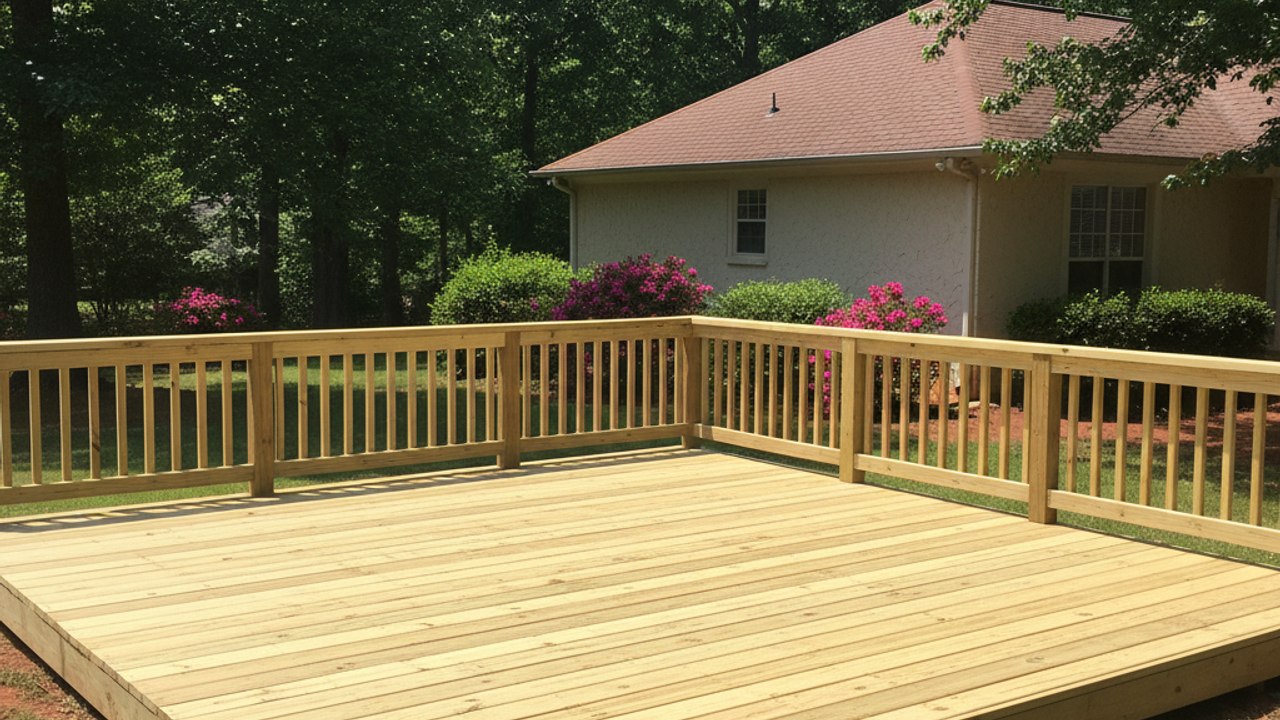
Douglasville sits on Piedmont red clay, and that one fact should shape almost every conversation you have with a deck builder. Clay expands when it's wet and shrinks hard when it dries out, and a footing that isn't set deep enough or wide enough will move with it. You won't see it the first year. You'll see it in year three, when a post has heaved half an inch and the railing above it has a lean nobody remembers. So before you talk about board color or railing style, talk about what's going in the ground.
Licensing, insurance, and who actually pulls the permit
In Douglasville and unincorporated Douglas County, an attached deck almost always needs a permit, and the inspector is going to want to see the footing holes before they're poured and the framing before the boards go down. That's not red tape for its own sake. It's the point where somebody with no financial stake in the job checks that the ledger is bolted into the rim joist and not just nailed, and that the footings are sized for the load. Ask the builder directly: who pulls the permit, you or them? If the answer is "we don't really bother with permits around here," that's your answer on whether to hire them. A deck built without inspection can still get flagged later when you sell the house, and a buyer's inspector will absolutely walk out onto it and give it a bounce test.
Ask for a certificate of insurance, not just a claim of being insured. General liability covers your landscaping and your neighbor's fence if something goes wrong mid-build. Workers' comp matters more than people think, because if a framer falls off a ladder on your property and the company has no coverage, the exposure can land on you.
What a real bid actually spells out
A serious quote reads like a materials list, not a paragraph of enthusiasm. It should name the footing size and depth, whether posts sit on precast piers or poured concrete, the joist spacing, and the fastener type. Joists at 16 inches on center is standard for most decking; composite boards often want 12 inches on center because the material sags more between supports than wood does, especially in Georgia's summer heat. If a bid doesn't distinguish between those two, they may not have priced the job correctly.
Ledger attachment deserves its own line item. This is the board bolted to your house that carries a huge share of the deck's weight, and it needs flashing behind it so water doesn't run down into your rim joist and sill plate. I've torn out decks in older Douglasville neighborhoods, places like the streets off Broad Street or the older pockets near downtown, where the ledger was just nailed on sometime in the 80s or 90s with no flashing at all. The wood behind it was soft and dark by the time we got to it. That kind of rot doesn't announce itself until someone leans on the rail.
Ask what fasteners they use. Hot-dip galvanized or stainless hardware matters here because our humidity runs high most of the year, and standard coated screws corrode faster than people expect, especially with pressure-treated lumber that's been through newer chemical treatments.
Red flags worth walking away from
- A quote with no mention of footing depth or post spacing, just a total price.
- Anyone who tells you a permit isn't necessary for an attached deck over a certain size.
- A deposit request for more than a third of the job before any material is on site.
- No willingness to say how many days the concrete needs to cure before framing loads onto it. It's usually a minimum of 48 hours before you can safely set weight, longer in cooler months.
- A builder who can't tell you the difference between joist hangers rated for treated lumber versus untreated. The chemicals in modern treated wood corrode plain steel hangers over time.
None of these by itself is fatal. A newer company can still do excellent work. But if you ask two or three of these questions and get vague answers or irritation, that tells you something about how they'll handle a problem mid-build.
What the local ground and weather actually do to a deck
Douglas County soil holds water long after a storm passes, and a lot of lots here were graded decades ago without much thought for where runoff goes. If your yard slopes toward the house, or the spot where the deck is going collects standing water after a heavy rain, that changes how footings should be set and whether you need gravel backfill around the posts. Summers here run hot and humid through June, July, and August, and that heat cycles wood decking through swelling and drying that opens up checking and cupping faster than in drier climates. Composite doesn't check the same way, but it does expand and contract with heat, which is why gapping between boards matters more here than the manufacturer's spec sheet might suggest for a northern climate.
Freeze-thaw isn't the main enemy here the way it is further north. We get occasional hard freezes, usually a handful of nights in January, but the bigger structural risk is the clay itself swelling and shrinking through the wet spring and dry late summer. Footings poured below the active zone of that clay movement, generally deeper than the bare minimum, hold up better over ten years than a footing poured to the smallest size that passes inspection.
Newer subdivision or older street, the job looks different
A deck going onto a house built in the last fifteen or twenty years, out toward Chapel Hill or the newer subdivisions off Post Road, usually means a rim joist and foundation that were built to current code, and framing is fairly predictable. An older home closer to downtown Douglasville or in one of the county's established neighborhoods might have a rim joist that's shifted, a sill plate with old water damage, or a foundation that was never quite square to begin with. A builder who's done both types of work will check the existing structure before quoting a firm price, not after signing a contract. If someone gives you a flat number over the phone without walking the site, be skeptical of how firm that number really is once they get under the house.
If you're weighing bids right now, ask each builder to walk you through their footing spec and ledger detail before you look at the price at all. The number means very little without knowing what it's buying. If you want to see how we spec that work locally, our page on our deck builder work walks through the materials and framing approach we use on jobs around Douglasville.