What We Do

Services

The full list of deck and porch work taken on, from framing to finish.

HomeServices

Everything we take on

Every job below is one we do ourselves across Douglasville.

Deck Installation

We build new decks from the ground up, starting with footings poured below the frost line and a ledger board flashed to keep water out of the rim joist. Framing goes down before we ever talk about board color, because a deck that racks or bounces is a framing problem, not a finish problem.

Deck Repair

Soft or spongy boards usually mean the joist underneath is rotting, not just the board itself, so we check the frame before we replace anything on top. We'll pull a few deck screws and probe the wood with a screwdriver to see how far the rot has spread before we quote the fix.

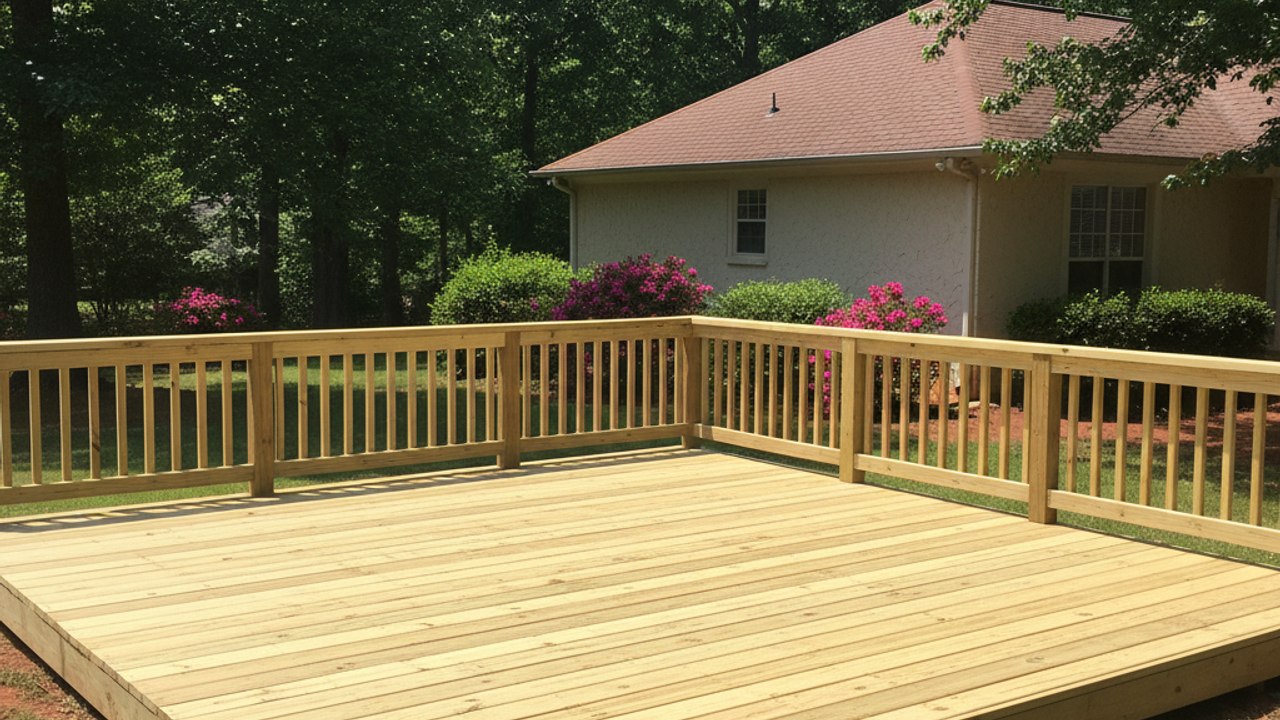
Deck Staining & Sealing

Pressure-treated pine should get a fresh coat of sealer every one to two years or the UV breaks down the wood fibers and it starts to gray and check. We pressure wash at low pressure first, let the wood dry for a couple of days, then apply a penetrating stain instead of a film-forming coating that just peels later.

Custom Deck Design

If you want a second level off an upstairs door, built-in bench seating, or a deck that steps down around a tree, we draw it out before we cut anything. We size the joists and beams for the actual load, not a generic span table, so a hot tub or a crowd of people doesn't become a structural problem later.

Deck Board Replacement

Individual boards crack, cup, or splinter years before the rest of the deck needs work, and there's no reason to rebuild the whole thing over a handful of bad boards. We match the board profile and fastener pattern so the repair doesn't stand out from six feet away.

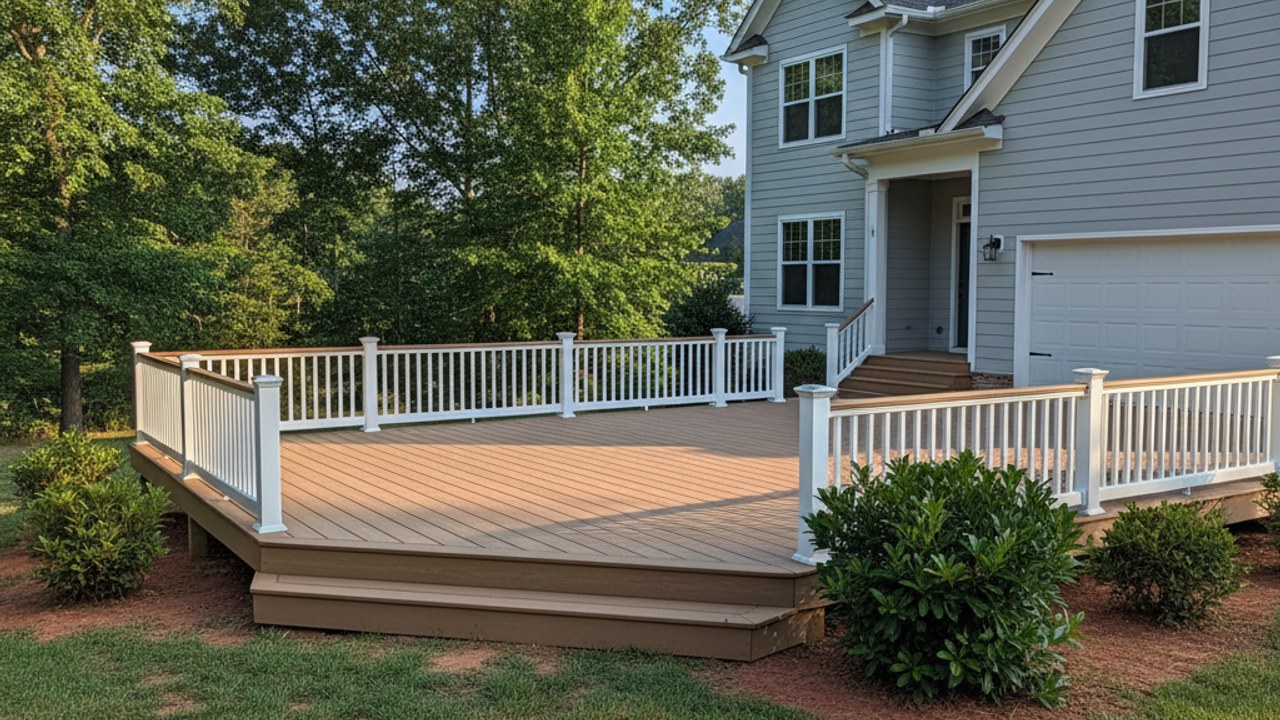
Composite Decking Installation

Composite boards don't rot or splinter, but they still call for proper joist spacing underneath, usually tighter than what pressure-treated lumber uses. We use hidden fastener systems on most composite jobs so you're not looking at screw heads down the length of the deck.

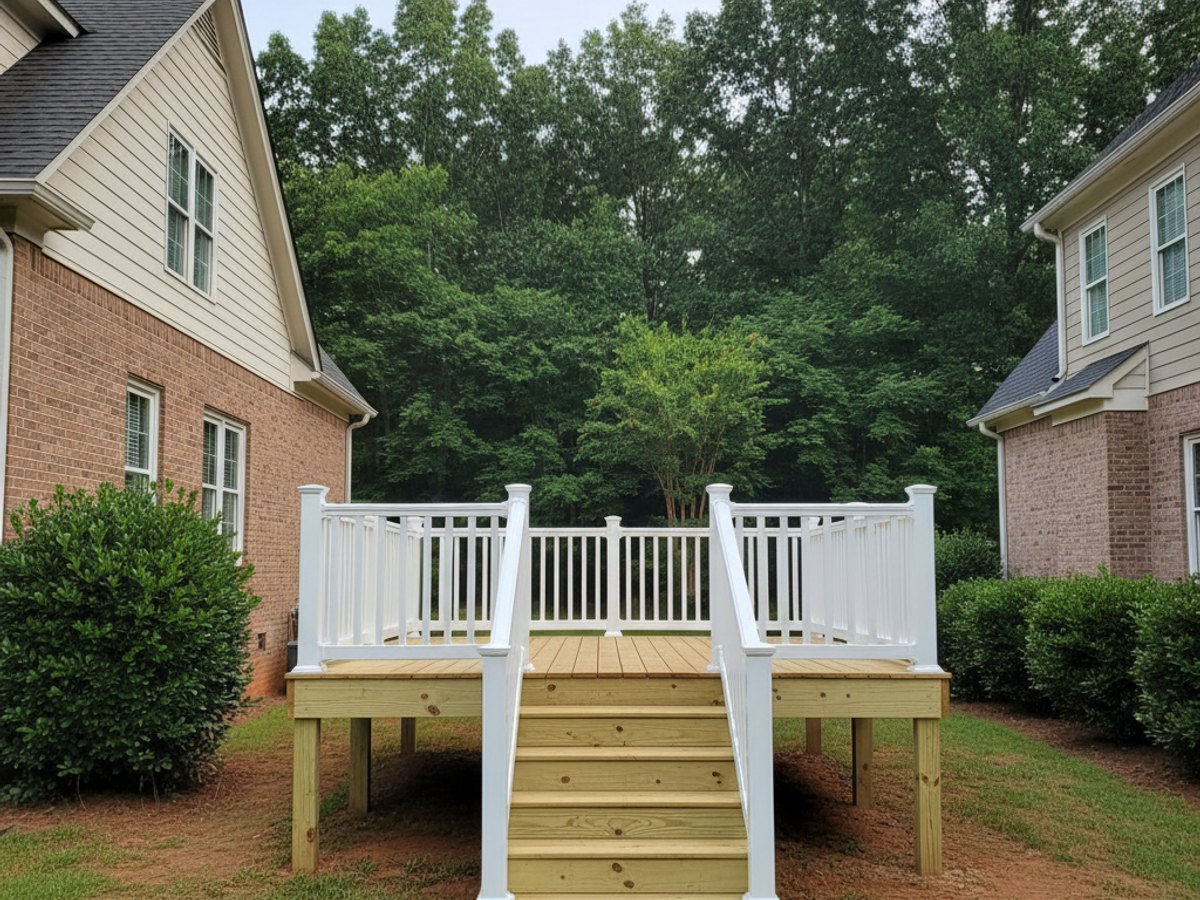
Deck Railing Installation & Repair

Georgia code calls for guardrails at 36 inches on most residential decks, with balusters spaced so a 4-inch sphere can't pass through. We replace wobbly posts by bolting through the rim joist with structural screws instead of toe-nailing, which is why most railings fail in the first place.

Screened-In Porch Construction

A screened porch is a roof, a deck floor, and framed screen panels, and each of those has to tie into your house without trapping water against the siding. We flash the roof-to-house connection the same way we flash a deck ledger, because that seam is where most porches eventually leak.

Deck Framing & Structural Repair

Ledger boards bolted into rim joists without flashing are the most common failure we find, usually after the rim joist behind it has been rotting for years unseen. We replace the ledger, add proper flashing, and check that footings haven't heaved or settled before putting new boards on top.

Deck Cleaning & Pressure Washing

We wash decks at 500 to 600 psi with a wide fan tip, enough to lift dirt and mildew without gouging the wood grain. This is also when we spot loose boards, popped nails, and rot before they turn into bigger repairs.

How It Works

Four steps, and no surprises in any of them.

01

We come and look

You tell us what you want doing, we look at what is actually there, and we ask the awkward questions early.

02

You get a price

In writing, itemised, free. If something might add cost later we flag it now rather than at the end.

03

We do the work

Same crew throughout. We cover your floors, keep the dust down and tidy up before we leave each day.

04

We walk it with you

You point out anything you are not happy with and we fix it before the invoice, not after.

Where We Work

All of this, across Douglasville, GA

Deck installation, repair, and staining across Douglasville and the surrounding towns served.

Douglasville, GA
Atlanta, GA
Marietta, GA
Smyrna, GA
Carrollton, GA
Newnan, GA
Powder Springs, GA
Villa Rica, GA
Dallas, GA
Austell, GA
Hiram, GA
Common Questions

Things worth asking

Questions that come up once a deck project is underway.

Do I need a permit to build a deck?
Most decks over 30 inches off the ground require a building permit in Douglas County and surrounding jurisdictions, along with a framing inspection before boards go down. Lower decks and simple repairs sometimes fall outside permit requirements, depending on the local code office.
How long does it take to build a deck?
A straightforward ground-level deck of a few hundred square feet usually takes about a week from footings to final boards, weather allowing. Multi-level decks, screened porches, or anything with custom framing takes longer, often two to three weeks.
Can a deck be built to fit a specific budget?
Yes, material choice is the biggest factor in price, and pressure-treated pine costs considerably less than composite or cedar for the same footprint. A project can also be phased, building the frame and basic decking now and adding railing or stair upgrades later.
Is deck work guaranteed?
Workmanship on framing, footings, and installation is covered by warranty, and any problem that traces back to the build gets fixed. Manufacturer warranties on composite decking or hardware are separate, and that paperwork gets passed along at the end of the job.
Who handles questions during the project?
One point of contact handles scheduling and questions, rather than a homeowner being passed between an office and a crew they never talk to. The same crew that starts a deck finishes it.
What decking materials are available?
Pressure-treated pine, cedar, and composite decking are all options, along with aluminum and cable railing systems for a different look than wood balusters. Each material has different upkeep, which gets explained before a decision is made.
Can the yard still be used while a deck is under construction?
Most of the yard stays usable during construction, though the immediate work area needs to stay clear for safety and material staging. Access to the door the deck attaches to may be limited for a day or two during ledger work.
How should a site be prepared before the crew arrives?
Furniture, grills, and potted plants should be cleared from the existing deck or the build area, and vehicles moved away from the driveway if a trailer of lumber is being delivered. Anything attached to an old deck, like lighting or a hot tub, should be dealt with before demolition starts.
What happens if rot or damage is found once the old deck comes down?
Hidden rot in a rim joist or ledger board is common once old decking comes off, especially where flashing was missing originally. Any damage found gets shown to the homeowner, along with a number for the fix, before extra work goes beyond the original quote.
How should a new deck be maintained?
Pressure-treated wood decks call for a fresh sealer coat every one to two years and an annual wash to keep mildew from taking hold. Composite decking just needs periodic washing, since it skips staining and sealing, but keeping debris out of the board gaps helps it drain properly.

Not sure what you need?

Describe the problem and we will tell you what it probably is. No obligation.
Call (770) 626-5280